Case Study
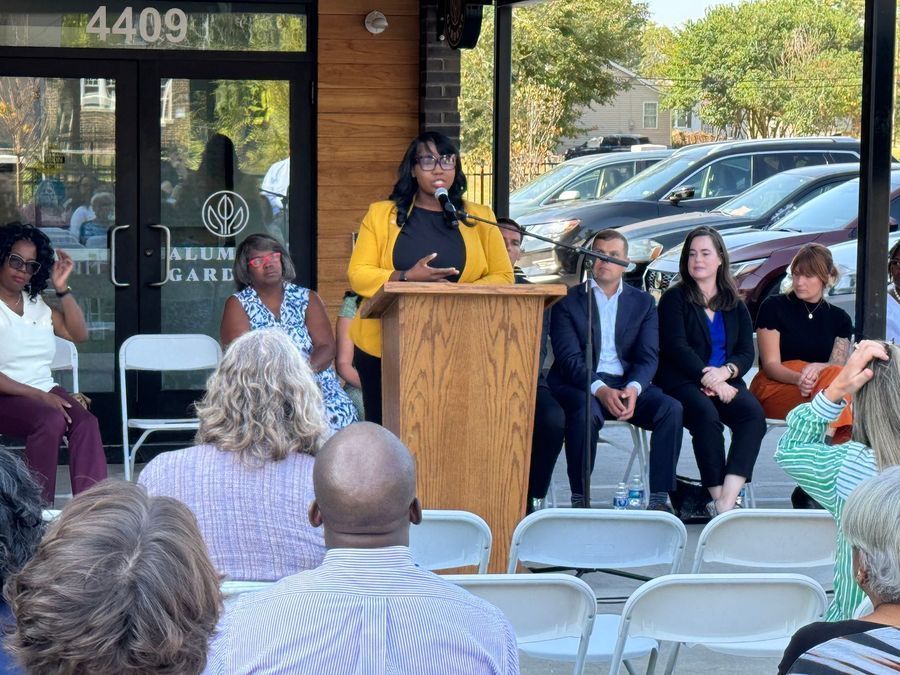
Case Study: The Alumnus Gardens Campus - Where Housing Meets Health
What it actually takes to put a health center and affordable homes on the same ground.
The Premise
Affordable housing is an essential social determinant of health. That is not a slogan. It is the operating principle behind everything we build at The Nash Group, and the Alumnus Gardens campus is the fullest expression of that principle.
The idea is straightforward: if where you live shapes who you become, then the place where you live should also be the place where you can access the care you need to stay healthy. Housing and health care should not exist on separate maps. They should share the same address.
The Ville Neighborhood
The Ville is a historically significant neighborhood in North St. Louis. Like many urban neighborhoods across the country, it has experienced decades of disinvestment. The residents of The Ville deserve better than what disinvestment has delivered. They deserve quality housing. They deserve access to health care. They deserve a community that is designed around their well being, not around the convenience of systems that have historically overlooked them.
That is what the Alumnus Gardens campus is designed to provide.
The Partnership
No project of this scale happens alone. The Alumnus Gardens campus is a partnership between The Nash Group and CareSTL Health, led by its chief executive. It also includes Vecino Group, the City of St. Louis. Each partner brings a different capability to the project, and the result is something none of us could have built independently.
CareSTL Health is a Federally Qualified Health Center. Their mission is to provide comprehensive health care to underserved communities. By co-locating their planned health center with over 115 affordable housing units, we are creating a model where residents can access primary care, behavioral health services, physical therapy, pharmacy services, and community programming without leaving their neighborhood.
The Numbers
The Alumnus Gardens campus is a major investment in North St. Louis. It includes over 115 affordable housing units in the Alumnus Gardens and Alumnus Gardens West developments, a 45,000 square foot health center, and community facilities. The project is creating 53 jobs. Phase one, the 60-unit Alumnus Gardens, opened in September 2024, and additional phases are in development.
Those numbers tell one story. The story behind the numbers is more important. One hundred twenty families will have stable, affordable housing. Those same families will have a comprehensive health center in their community. Behavioral health, physical therapy, a pharmacy, and a community center will be within walking distance of their front door. The project addresses the social determinants of health not in theory, but in concrete, steel, and operating agreements.
The Brown University Recognition
In 2025, Brown University School of Public Health awarded me the Public Health Impact Award for advancing public health by integrating affordable housing and health care through the Alumnus Gardens campus. Brown's announcement noted that the work addresses social determinants of health, aiming to enhance the quality of life for residents in economically disadvantaged neighborhoods.
I earned my Master of Public Health from Brown. The recognition from my alma mater carries particular meaning because it validates the approach that my MPH studies helped me develop: the conviction that housing and health are inseparable, and that addressing one without the other is an incomplete solution.
Why This Model Matters
The traditional approach to affordable housing treats housing as an end in itself. Build the units. Fill the units. Maintain the units. That approach has produced millions of affordable housing units through LIHTC and other programs, and it has done enormous good. But it leaves something on the table.
Residents in affordable housing are disproportionately likely to face health challenges: chronic conditions, behavioral health needs, limited access to preventive care. If the development does not address those needs, residents cycle between housing instability and health crises. Stable housing reduces emergency room visits. Access to primary care reduces hospitalizations. Behavioral health services reduce the crises that lead to evictions. The Alumnus Gardens campus addresses the full cycle.
I learned this firsthand. I grew up in Section 8 public housing in Kansas City. My mother raised six children by herself, on welfare. If your home life is unstable, everything in your life is going to be unstable. That is what I experienced as a child, and it is what my MPH studies at Brown confirmed with data. Housing stability is a health intervention. The Alumnus Gardens campus is designed around that fact.
The Campus Components
The campus is designed as an integrated community, not a collection of separate buildings that happen to share a site. The components include:
120 Affordable Housing Units in the Alumnus Gardens and Alumnus Gardens West developments, serving families who need quality, dignified housing.
Federally Qualified Health Center operated by CareSTL Health, providing comprehensive primary care to the community.
Behavioral Health Services addressing the mental health needs that are inseparable from housing stability.
Physical Therapy providing rehabilitation and wellness services on site.
Pharmacy ensuring that residents have access to medications without traveling across the city.
Community Center creating gathering space for programming, education, and connection.
The Replication Question
People ask whether the Alumnus Gardens campus model can be replicated. The answer is yes, but it requires three things that most developments do not have: a health care partner with the mission and capacity to operate a comprehensive clinic, a financing structure that supports both the housing and the health center components, and a development team that understands both affordable housing and public health.
The Nash Group brings that understanding. My nine degrees include a Master of Public Health from Brown, a Juris Doctor, an MBA in Finance, and a Master of Urban Planning from USC. That combination exists specifically because the problems I am trying to solve do not fit inside a single discipline. The Alumnus Gardens campus is proof of that principle.
This is not a theoretical model. The campus plans call for 120 affordable homes, a 45,000-square-foot health center and an expected 53 jobs, a major investment in a neighborhood that the rest of the world had written off.