

We Advise
Community & Stakeholder Engagement
When Dr. Troy Nash needed to understand the Prospect Corridor crisis, he didn't commission a study from an office downtown.
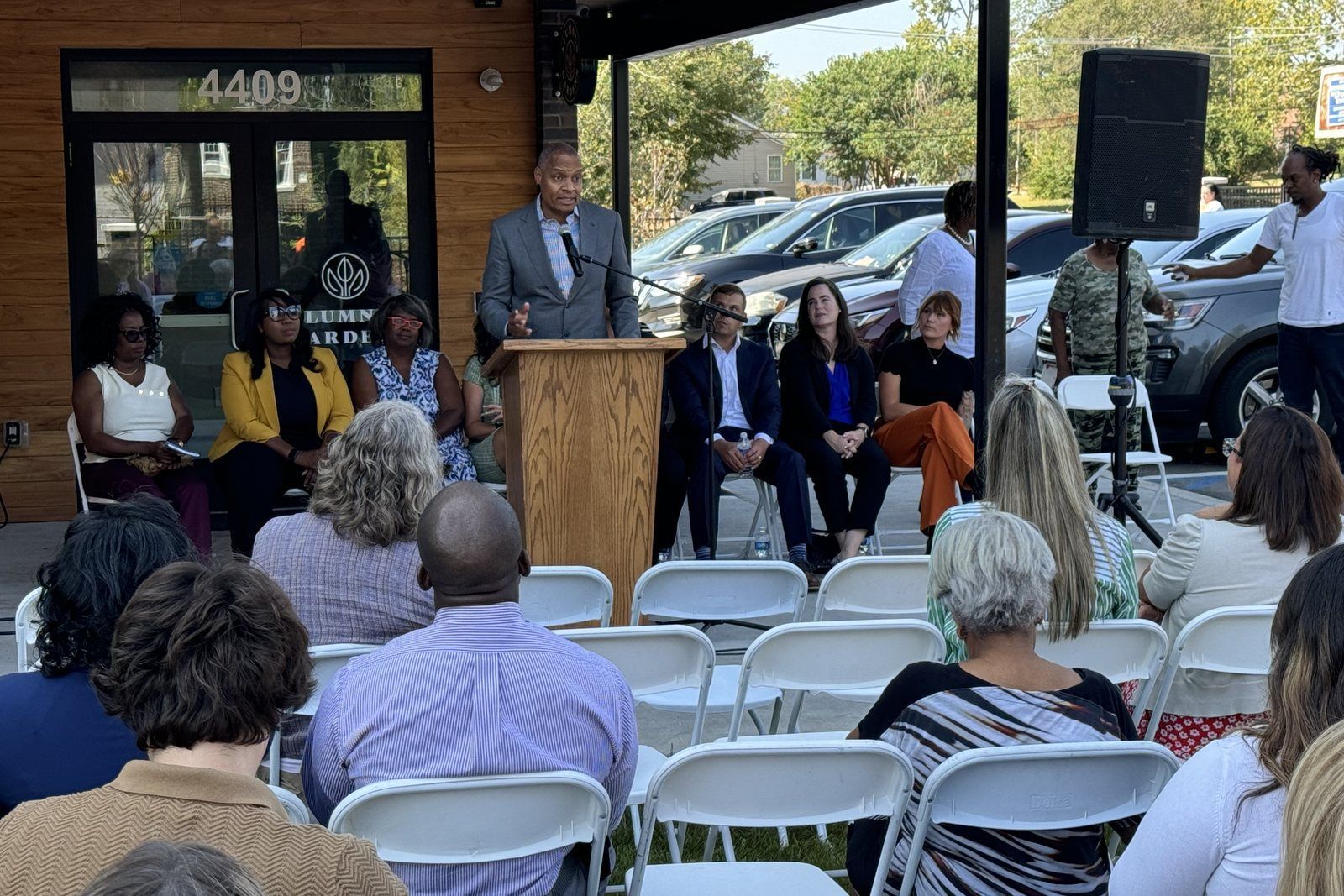
Available as prime consultant or subcontractor for community and stakeholder engagement.
Facing a data center, battery storage, or another use your community has never had to evaluate? See our Emerging Industry Engagement practice
The Prospect Corridor Story
Office Hours on The Corner
"You can't understand a community's needs from a conference room. You have to walk the streets, sit on the porches, and sleep where the people sleep."
Summer 2000. 39th and Prospect Avenue, Kansas City. One of Kansas City's most troubled corners. While other politicians held press conferences and commissioned reports, newly elected City Councilman Troy Nash did something nobody expected.
He set up camp. For six days and nights in July 2000, Nash and the Move Up group held a 144-hour marathon on the corner, meeting with residents, business owners, church leaders, and anyone else who wanted to talk. He witnessed the crisis firsthand: the abandoned buildings, the open air drug markets, the families trapped in a food desert with no grocery stores for miles.
The Result: A Citizen Driven Corridor Plan
Nash's unconventional approach produced what no consultant study could: a community driven economic development plan for the Prospect Corridor. Nash also worked to bring two grocery stores to the East Side: a Save-A-Lot at 3410 Troost, which opened in 2001, and an ALDI at 39th and Prospect, which he first proposed in 2004 and which broke ground in 2013.
But Nash didn't stop there. When residents of one of the city's most dangerous housing complexes cried out about horrific living conditions, open air drug sales, violence, neglected facilities, Nash moved in. He moved into the complex for the month of June 2002, documenting conditions and advocating for change.
When firefighters complained about decrepit stations, Nash didn't just write a memo. He slept overnight in fire stations experiencing firsthand what these heroes endured daily. Voters then approved a 15-year, quarter-cent fire sales tax projected to raise $276 million to repair or replace Kansas City's aging fire stations, add new stations, hire 135 firefighters, and pay for equipment and maintenance.
Why We're Different
Traditional Firms vs. Nash Group
Most consultants observe communities from the outside. We move in.
Conference Room Planning
Consultants who never walked the corridors they plan. Studies built on data, not lived experience.
Boots on the Ground
We camp on the corners, live in the complexes, and sleep in the fire stations. We don't study communities. We join them.
Top Down Reports
Thick binders that sit on shelves. Recommendations made without community input or ownership.
Citizen Driven Plans
Plans built WITH communities, not FOR them. Real ownership that leads to real implementation.
9 to 5 Engagement
Meetings scheduled during work hours when residents can't attend. Convenient for consultants, not communities.
24/7 Commitment
Evening church meetings. Saturday morning door knocking. We meet people when and where THEY are available.
Digital & Tech Forward
Modern Engagement Tools
We combine boots on the ground authenticity with digital tools to reach every resident.
Participatory GIS Mapping
Interactive map based surveys where residents mark concerns, assets, and priorities directly on digital maps.
Virtual Town Halls
Hybrid digital and in person meetings with real time polling, Q&A, and breakout rooms for deeper discussion.
AI Sentiment Analysis
Real time analysis of community feedback to identify trends, concerns, and emerging themes across all input channels.
Mobile First Platforms
SMS surveys, geo fenced notifications, and app based engagement to meet residents where they already are, on their phones.
Transparency Dashboards
Public facing data visualization showing how community input shapes decisions, building trust through radical transparency.
VR Project Visualization
Immersive 3D walkthroughs allowing residents to experience proposed developments before ground is broken.
Social Media Integration
Strategic use of Facebook, Instagram, Nextdoor, and community platforms to amplify reach and engagement.
24/7 Engagement Portals
Always on project websites with forums, idea boards, and feedback mechanisms accessible anytime, anywhere.
Boots on the Ground
Field Engagement
Technology extends our reach, but nothing replaces face to face relationships in the community.
Door to Door Canvassing
Personal relationship building, one porch at a time. There's no substitute for knocking on doors.
Pop Up Engagement Stations
Meeting people where they gather, grocery stores, transit stops, community events, and neighborhood festivals.
Faith Community Partnership
Deep partnerships with churches, mosques, and temples, trusted institutions at the heart of every community.
Walking Audits
Physical corridor assessments WITH residents, walking the streets together to identify issues and opportunities.
Community Town Halls
Large format public meetings with professional facilitation, live translation, and structured feedback collection.
Neighborhood Association Meetings
Attending existing community gatherings rather than expecting residents to come to us.
Business Corridor Engagement
Shop by shop outreach to commercial stakeholders who know their customers and corridors intimately.
Photovoice Projects
Residents document their reality through photography, then present to decision makers, powerful visual storytelling.
Servicios Bilingües / Bilingual Services
Every community deserves to be heard in their own language. We provide full Spanish language engagement services.
Track Record
Decades of Field Experience
2000
39th & Prospect Corner Campaign
Camped for six days at 39th and Prospect. Drew city attention and investment to the Prospect Corridor.
2001
Fire Station Sleep Overs
Slept overnight in Kansas City fire stations to experience conditions firsthand. Voters later approved a 15-year, quarter-cent fire sales tax projected to raise $276 million.
2002
Housing Complex Residency
Moved into one of the city's most troubled housing complexes for the month of June 2002. Joined the Move Up group's 30 Ways in 30 Days effort to bring services to residents.
2023-Present
Transit Oriented Development Engagement
Co-developing Promise Place (85 units) and The Mabion (57 units), transit-oriented affordable housing approved by the KCATA Board of Commissioners, with strong support from the Ivanhoe neighborhood.
Ready for Real Engagement?
Don't hire consultants who never walked your corridors. Partner with a team that camps on corners, sleeps in fire stations, and lives in the communities we serve.
Hiring a prime consultant or building a team? We welcome both.
Contact Dr. Troy Nash directly:
Why this is hard to copy
One buyer put the ranking in writing
This is not the firm’s opinion about how it should be judged. At least one public buyer writes the order down.
The regional planning organization lists its evaluation criteria and says they are applied “in order of priority”. First is specialized experience and technical competence. Second is understanding of the project. Third is references from previous work. Total project cost is listed last.
Not every buyer ranks it that way, and some name cost first. But where a buyer publishes the order, competing on price alone answers the criterion it put last.
Source: Mid-America Regional Council, Request for Proposals, Hazards and Vulnerability Analysis, section I, read 17 September 2026.
The evidence
What this is built on
Not a claim about capability. These are the accounts behind this service, each one carrying the coverage published at the time.
Our team consists of four USC-trained urban planners, plus professional degrees in architecture, law, economics, and nonprofit management.
July 2000
Nash Targets Ground Zero of Blight
Six days on one of the city's hardest corners.
Read the account →June 2002
Move Up at Hilltop Townhomes: Living Where the Problems Are
Living where the problem was.
Read the account →2001
Sleeping in Fire Stations: The $276 Million Sales Tax Story
Sleeping in the stations until the city looked.
Read the account →September 2000
Bridging the Racial Divide
Convening across a divide the city had stopped crossing.
Read the account →We can’t predict the future. We can predict the room.
Public, private, nonprofit or philanthropic, we know the questions that room will ask and where a deal is likely to break. We spent our years doing the work, not writing about it, so our advice carries lived experience, practical knowledge and academic preparation.