First African American Student Curator: University of Missouri

Troy Nash • March 18, 2026

Share this article

Press Coverage: University of Missouri records, 1996; Nash Appointed to Board of Curators; Student Curator Nash Represents Campus; Student Curator Approaches End of Term; UM Student Curator Troy Nash Ends Term with a Mission; Carnahan Nominates Nash for Student Rep

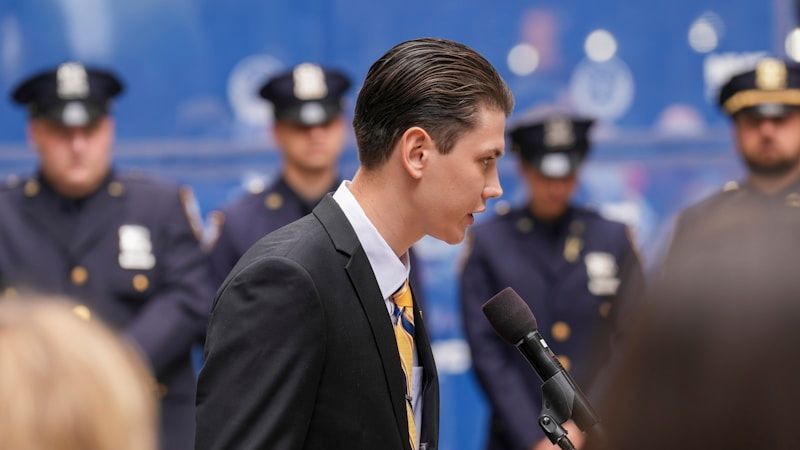
On January 4, 1996, Governor Mel Carnahan nominated me to be the next student representative to the University of Missouri Board of Curators. I was 26 years old, a law student at the University of Missouri-Kansas City, a graduate of Wesley's College in Dover, Delaware, a veteran of Operation Desert Shield and Desert Storm, and I held a master's degree in economics from UMKC while pursuing a doctoral degree in economics. I was young. The board was not.

The Board of Curators governs the entire University of Missouri system: four campuses, a health system, a research enterprise, and a budget that runs into the billions. The curators make decisions about tuition, facilities, academic programs, and institutional strategy. They are appointed by the governor and confirmed by the state senate. I would succeed UM-Rolla student Gayatri Bhatt, whose two-year term had expired in December.

What The Appointment Meant

Being the first means something different than being the second or the fifth. The first carries the weight of every person who came before and did not get the opportunity. It carries the expectation of every person watching who hopes you will open the door wider for the next one. And it carries the scrutiny of every person who questions whether you belong at that table.

I was 26 years old, sitting in meetings with university presidents, business leaders, and political appointees who had decades more experience than I did. The conversations were about budgets in the hundreds of millions, capital projects, enrollment strategy, faculty hiring, and research priorities. I was expected to contribute meaningfully, and I did.

The press covered the appointment extensively. Multiple outlets documented both the historic significance and the substance of my service. "Nash Appointed to Board of Curators." "Student Curator Nash Represents Campus." "Carnahan Nominates Nash for Student Rep." When my term ended, the coverage noted that I had used the position not just as an honor but as a platform for advocacy on issues of access, equity, and student representation. "UM Student Curator Troy Nash Ends Term with a Mission."

What I Learned At That Table

The Board of Curators was my first experience with institutional governance at scale. It taught me how large organizations make decisions, how budgets are structured, how competing priorities are balanced, and how the people at the top of complex institutions think about risk, investment, and strategy.

These are the same skills I use today on every board I serve on. When I sit on the board of JDRC, or Paramount Bank, or the University of Health Sciences, I bring a comfort with institutional governance that started at the University of Missouri when I was 26.

The curatorship also taught me that representation matters in operational terms, not just symbolic ones. When I raised issues of access and equity in board discussions, I was bringing perspectives that the other curators had not considered. Not because they were bad people, but because they had not lived those realities. My presence at the table changed what the table discussed.

That lesson has stayed with me for 30 years. When The Nash Group engages with communities, with government agencies, and with institutional partners, we bring perspectives that are often absent from the conversation. We bring the perspective of someone who grew up in public housing. We bring the perspective of someone who has served in government and seen the system from the inside. We bring the perspective of someone who has built projects in neighborhoods that most developers ignore. Those perspectives change the conversation, just as my presence on the Board of Curators changed the conversation at the University of Missouri.

The Through Line

People sometimes look at my resume and wonder how student governance connects to affordable housing development. The connection is direct.

Institutional governance teaches you how to navigate complex systems with competing stakeholders. A university board manages the interests of students, faculty, administrators, legislators, donors, and the public. An affordable housing development manages the interests of residents, investors, lenders, city officials, state agencies, and community organizations. The skill set is the same: listen to everyone, understand the constraints, find the alignment, and make a decision that moves things forward.

The curatorship was the beginning of a career built on navigating complex institutional environments. The Kansas City Council, the Missouri Housing Commission, corporate boards, university leadership — each one built on the governance skills I first developed as a student curator.

Governor Carnahan saw something in a young Black student that warranted a seat at one of the most powerful tables in Missouri's educational system. Thirty years later, that instinct has been validated by a career that spans government, academia, the private sector, and community service. The table got larger, but the approach stayed the same: show up, prepare, contribute, and leave the institution better than you found it.

Recent Posts

By Troy Nash March 19, 2026
I grew up in public housing. Section 8. Kansas City, Missouri. That is not a metaphor or a brand story. That is where I slept at night. My mother raised us without much, but she raised us with an understanding that where you start does not determine where you finish. I took that seriously. Maybe more seriously than she intended, because by the time I was done, I had collected nine academic degrees, traveled to more than 50 countries, served on the Kansas City Council, been appointed to the Missouri Housing Development Commission by the governor, joined the boards of a bank, a university, and a national development company, and built a real estate advisory firm that operates across multiple states. Savoy Magazine named me among the Most Influential Black Executives in Corporate America in 2020 and again in 2022. Ingram's Magazine put me on their list of 50 Missourians You Should Know in 2015. I am telling you this not to impress you but to establish a fact: the trajectory from public housing to national recognition is documented. It is not a claim. It is a record. The Arc Nine degrees sounds excessive until you understand the logic. Each degree opened a door that the previous one could not. A bachelor's degree got me into law school. Law school gave me the tools to understand policy. A master's in public administration taught me how government actually works from the inside. An MBA taught me how capital flows. A doctorate gave me the credibility to teach at a university. Every credential was a strategic investment in the next phase of the work. People ask me why I kept going back to school. The answer is simple: every time I reached the next level of my career, I discovered that I needed knowledge I did not yet have. When I entered government, I needed to understand public administration. When I started doing development deals, I needed to understand finance. When I wanted to teach at a university, I needed the terminal degree. Education was never the goal. It was always the tool. The Kansas City Council taught me how cities make decisions. Chairing the Planning, Zoning, and Economic Development Committee showed me the full machinery of urban development: the politics, the financing, the community dynamics, and the trade-offs that nobody talks about publicly. Every major development project in Kansas City crossed my desk. Every zoning change. Every tax abatement. Every TIF district. I saw how the system worked from the inside, and that education was more valuable than any degree. The Missouri Housing Commission taught me how states allocate Low Income Housing Tax Credits. As a commissioner appointed by Governor Jay Nixon, I sat on the other side of the table from the developers who submitted applications. I evaluated their proposals. I participated in discussions about which projects deserved limited state resources. That experience is available from almost nobody in the private sector, because almost nobody in the private sector has served as a housing commissioner. Traveling to 50 countries was not tourism. It was education. I studied housing systems in Europe, urban planning models in Asia, community development approaches in Africa and Latin America. In Cuba, I studied a healthcare delivery model that puts a doctor in every neighborhood, and I brought that concept back to Kansas City, where it eventually influenced our approach to co-locating healthcare with affordable housing. Every country taught me something. Every lesson informed the work. Why I Built The Nash Group After years in government and education, I understood something that most people in this field do not: the gap between policy and execution is where communities get hurt. Policies exist. Funding exists. Tax credits exist. But the people who can actually structure a deal, navigate the politics, manage the construction, and deliver housing that serves the community are rare. There are plenty of policy experts who cannot execute. There are plenty of builders who do not understand policy. There are plenty of consultants who have never served in government. The Nash Group exists because I have done all three, and I built a firm that brings all three capabilities to every project. We do not just advise. We develop. We do not just develop. We teach. The Lewis White Real Estate Center at UMKC, where I serve as director, trains the next generation of real estate professionals using the same principles that built the firm. That is not a side project. It is core to the mission, because the problems we work on will outlast any individual career. What This Story Means For You If you are a prospective client evaluating whether to work with us, here is what my story tells you: I have been on every side of this table. I have been the resident who needed housing. I have been the elected official who voted on housing policy. I have been the commissioner who allocated tax credits. I have been the developer who built the housing. And I have been the professor who teaches others how to do it. That is not a typical resume in this industry. Most people know one side. I know all of them. And that knowledge shows up in every project we touch, because we understand not just what needs to be built but why it matters and who it serves. When we sit across the table from a housing finance agency, we understand their perspective because I have been a commissioner. When we engage with a city council on an entitlement approval, we understand the political dynamics because I chaired the committee that made those decisions. When we structure a capital stack, we understand the investor's requirements because I have an MBA and have closed these deals myself. When we engage with community residents, we understand their concerns because I grew up in public housing and I have lived in the conditions that bad housing creates. The kid from Section 8 did not forget where he came from. He turned it into a career that has generated hundreds of millions of dollars in community investment across multiple cities. That is the power of refusing to accept your starting point as your endpoint. Thirty years. Nine degrees. Fifty countries. And it all started in public housing in Kansas City. ================================================================= THEME 2: AFFORDABLE HOUSING DEVELOPMENT =================================================================
By Troy Nash March 19, 2026
People always want to know how I got here. They see the degrees, the developments, the board seats, and they assume there was some master plan. There was not. What there was, at the very beginning, was a kitchen table and a set of circumstances that demanded I do something about them. In 1995, I was 25 years old, a law student at the University of Missouri-Kansas City, living with my wife Sherrie in a house on Charlotte Street near Brookside. My three older brothers — Harvey, Daryl, and Todd — were smart men with no credentials and no clear path forward. They had the ability but not the access. Nobody had shown them how to navigate the system that separates people who can from people who do. I decided that if nobody else was going to do it, I would. Every Saturday at 10 a.m., we held a formal meeting at my house. I sat at that kitchen table and worked with all three of my brothers. We went through the material together. We talked about what college actually was, what it required, and what it could open up. The brothers all wore ties. They rose when they spoke, observed parliamentary procedure, and referred to one another by formal titles. It was not some grand philanthropic project. This was family. These were my brothers, and they were too talented to stay where they were. There is a particular kind of frustration that comes from watching people you love operate below their potential. Not because they are lazy or incapable, but because nobody ever sat them down and said: here is how this works. Here is what you need to do. Here is the path. My brothers had spent their entire lives in a system that was not designed to show them that path. The schools they attended were underfunded. The neighborhoods they grew up in were disinvested. The message they received from every institutional interaction was that people like them did not go to college. I rejected that message. And then I spent months proving it wrong, one brother at a time. One by one, each of them enrolled in college. The conversations were not always easy. When you are an adult who has been out of school for years, the idea of going back feels impossible. You feel too old. You feel too far behind. You feel like the opportunity has passed. My job was to break through that feeling and replace it with evidence: here is the application. Here is the financial aid form. Here is the course catalog. You can do this. I will help you. My mother watched her sons transform their lives, and then she did the same thing. At 55 years old, my mother earned her GED. She looked at what her boys were doing and decided she was not going to be left behind. That is the most powerful thing I have ever witnessed in my life. A woman who had spent decades raising children in public housing, who had every reason to believe that her own educational moment had passed, looked at her sons and said: if they can do it, so can I. She was right. Why This Matters I tell this story not because it makes for a good profile piece, although it does. I tell it because it explains everything that came after. Every development I have built, every policy I have fought for, every classroom I have taught in comes from the same impulse that put me at that kitchen table: if the people around you have the ability but not the access, you create the access. This was not about charity. It was about refusing to accept that my family's circumstances were permanent. The housing projects where I grew up taught me that systems create conditions, and conditions shape lives. But they also taught me that individuals can break those conditions if somebody shows up with a plan and the willingness to execute it. My brothers did not need saving. They needed a bridge. That is the same thing I have spent the last 30 years building for communities across this country. Different scale, same principle. The parallel to affordable housing development is direct. When we build housing in an underserved neighborhood, we are not rescuing the community. We are providing infrastructure that allows the talent and determination that already exists in that community to flourish. The families who move into our developments are not charity cases. They are people who need a bridge between where they are and where they want to be. Quality, affordable housing is that bridge. The same is true of the policy work. When I sat on the Kansas City Council and fought for investment in East Side neighborhoods, I was not arguing that those neighborhoods were helpless. I was arguing that they deserved the same public infrastructure that the rest of the city took for granted. The people were capable. The systems had failed them. The Lesson When people evaluate The Nash Group, they are evaluating whether we actually care about the communities we serve. I understand that skepticism because I have seen plenty of developers who treat affordable housing as a transaction. Build the units, collect the credits, move on. That is not us. Our commitment to community transformation predates the company. It predates my career. It started at a kitchen table in Kansas City with a 25 year old kid who refused to watch his brothers get left behind. My mother earning her GED at 55 proved something I have believed ever since: it is never too late, and nobody is beyond reach. That conviction shows up in every project we take on. When we build housing in a neighborhood that has been disinvested for decades, we do not just build units. We build the infrastructure that lets people reach for something better. The Kansas City Star covered this story in 1995, back when I was just getting started. They saw a young man helping his family. What I see, looking back, is the foundational act that defined everything. If you can change your family, you can change a block. If you can change a block, you can change a neighborhood. If you can change a neighborhood, you can change a city. That is not a slogan. That is a 30 year track record. And it started with three brothers, a kitchen table, and a refusal to accept that where you start is where you finish.
By Troy Nash March 18, 2026
Press Coverage: Kansas City Star; Secretary of Housing and Urban Development Visits Kansas City
By Troy Nash March 18, 2026
Press Coverage: Kansas City Star; Nash, Weaver Secure Funding for Police Trailer and ATVs to Help Fight Crime; City Councilman Unveils Plan to Combat Crime in the Third District
By Troy Nash March 18, 2026
Press Coverage: Kansas City Star; City Councilmen Sponsor Forum to Bridge the Racial Divide; KC Councilmen Share Lessons of Diversity; Students Say Racism Exists in KC
By Troy Nash March 18, 2026
Press Coverage: Kansas City Star; Ordinance by Nash, Williams-Neal Targets Troost Revitalization
By Troy Nash March 18, 2026
Press Coverage: Kansas City Star; Labor Unions Partner with City to Renovate Community Centers; Councilman Nash Continues Partnership with Labor Unions; Labor Groups Endorse Troy Nash
By Troy Nash March 18, 2026
Press Coverage: Kansas City Star; KC Seeks New Jobs, Business with Mexico; KC Group Will Prospect in Costa Rica; New Council Panel Aims to Steer KC's Role in Global Trade; Council Nash Discusses Business Linkages with Mayors
By Troy Nash March 18, 2026
Press Coverage: Troy Nash Named to White House Board; PTPI Board of Trustees Meeting
By Troy Nash March 18, 2026
Press Coverage: Savoy Magazine, 2020 and 2022
Show More